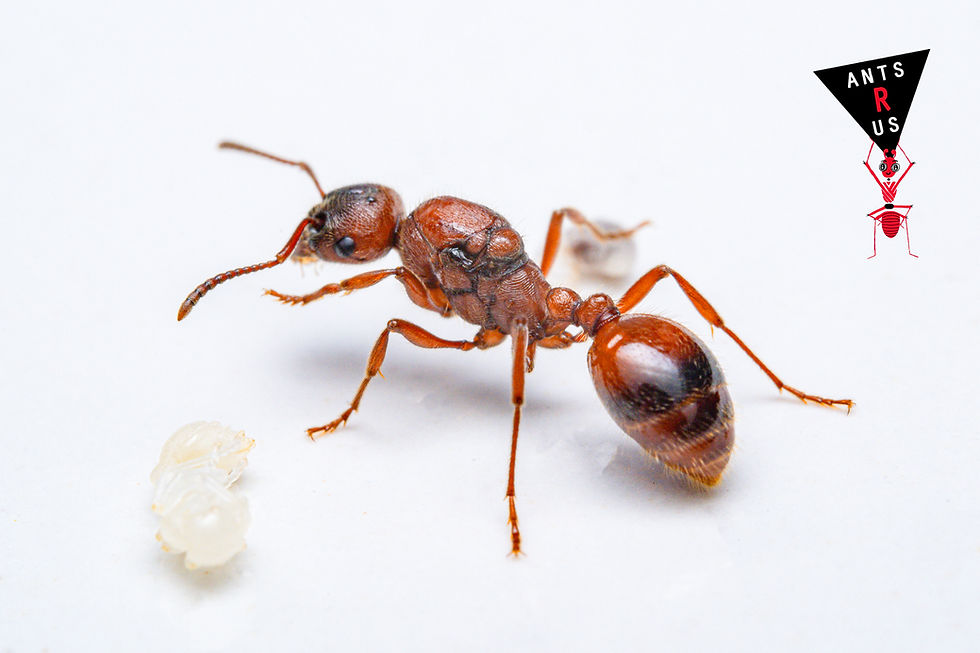
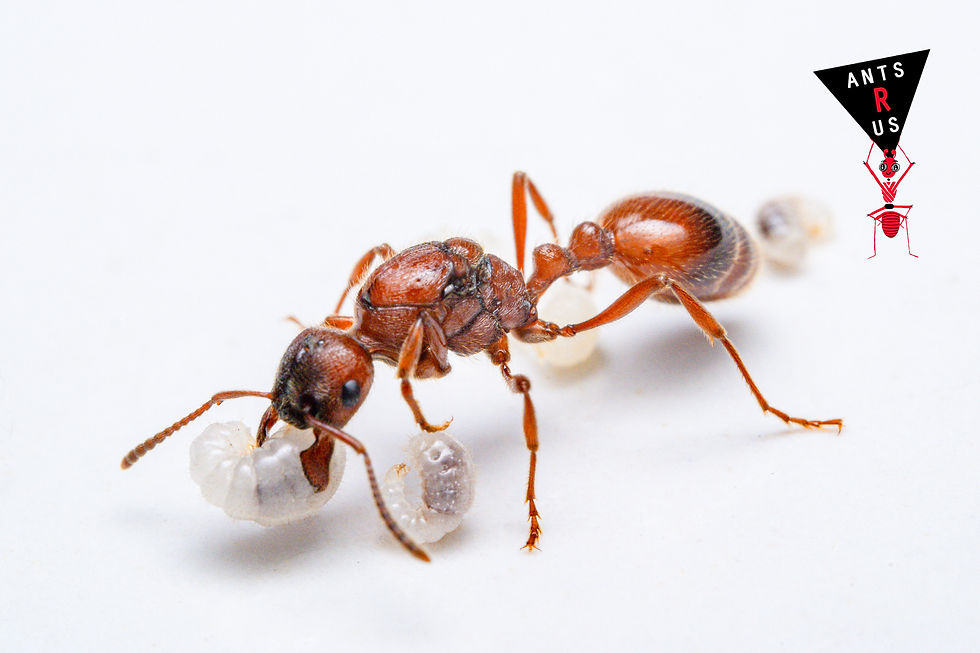
Camponotus ocreatus is a striking desert carpenter ant native to the southwestern United States and northern Mexico. This beautiful species is instantly recognisable by its contrasting black head and amber-orange body, making it one of the most visually distinctive members of the Camponotus genus.
Rarely available in Europe, and even less commonly offered in the UK, C. ocreatus is highly sought after by collectors due to its unique appearance, impressive size, and fascinating colony structure. Their elegant colouration, active foraging behaviour, and large workers make them a true centrepiece species for any ant keeper.
Care Requirements
Colony Structure
- Facultatively polygyne (multiple queens may coexist under suitable conditions)
- Fully claustral founding species
- Colonies can exceed 10,000 workers per queen in mature nests
- Queens generally found independently but may accept supplementary feeding during founding
- Moderate growth rate compared to many other Camponotus species
Temperature
- Ideal: 26-28°C
- Consistent heating significantly improves brood development and colony growth
Humidity
- Nest humidity: 60–75%
- Outworld humidity: Low to moderate
- Provide a humidity gradient, allowing the colony to choose preferred conditions
- Avoid excessive moisture, as this is a desert-adapted species
Diapause
- Recommended winter diapause of 2–3 months
- Temperature: 12–15°C
- Typically, from November through January
- Colonies should remain hydrated during diapause but require very little food
Polymorphism
- Moderately polymorphic species
- Workers display noticeable size variation
- No true major or soldier caste, although larger workers develop significantly broader heads and stronger mandibles
Diet
Carbohydrates
- Sugar water
- Honey water
- Maple syrup (occasionally)
- Commercial ant nectar
Protein
- Roaches
- Crickets
- Locusts
- Mealworms
- Fruit flies
- Other feeder insects
Protein requirements increase substantially when brood is present.
Suitable Nest Types
For founding colonies:
- X Series Combo Starter Nest
- Vertex Combo Nest
For established colonies:
- Medium to large acrylic or hybrid nests
- Modular nest systems that allow gradual expansion
- Dry nests with a hydrated section work particularly well
Size
- Queen: 14–17.5 mm
- Workers: 6.5–13 mm
Difficulty Level
Intermediate
While relatively forgiving once established, Camponotus ocreatus requires stable heating, a proper diapause period, and patience during founding. The species rewards keepers with beautiful colouration, impressive worker size variation, and highly active foraging behaviour.